




Wired
Fiber: Laying the Groundwork for the Experience and Adaptive Eras


Key Points
- Fiber infrastructure supports the high-capacity and low-latency foundation needed to support seamless connectivity as user expectations evolve beyond raw speed.
- CableLabs’ work in fiber technologies — from FTTP to DPoE specifications — advances deployment efficiency and interoperability across the broadband ecosystem.
For years, the broadband industry’s innovative energy focused on speed: faster downloads, higher throughput, more gigabits per second. But as online activity has been woven more deeply into the fabric of daily life, user expectations have shifted. Today’s success metrics place less emphasis on speed and more on quality, reliability and seamless experiences that adapt to user needs.
CableLabs has been working on fiber optics throughout this evolution because we view fiber as a valuable, practical technology for broadband networks today — and one whose role and value continue to grow. The industry’s progression from the Speed Era to the Experience Era — and now toward the Adaptive Era — reinforces why fiber optics has been, and remains, foundational to the future of broadband.
Fiber as a Foundational Technology — Then and Now
This evolution from the Speed Era to the Experience Era, and ultimately toward the Adaptive Era, requires deliberate changes in how networks are designed, built and operated. Seamless connectivity and intelligent solutions demand high-capacity, reliable infrastructure that can support new technologies and service offerings.
Fiber optics is a key technology enabling this shift. Fiber optics enabled the Speed Era by addressing growing demands for throughput and scale. As the industry moved into the Experience Era, those same characteristics became essential for delivering consistent, high-quality connectivity — and fiber optics will continue to be a key enabler as networks evolve toward the Experience and Adaptive eras.
Fiber Optics at CableLabs
Fiber optics is widely recognized as the preferred broadband solution for new network builds among municipalities, utilities, telcos and traditional cable operators. Its ability to support significant capacity growth and evolving technologies makes it a strong foundation for future broadband innovation.
At CableLabs, our work in fiber optics spans the full lifecycle of fiber to the premises (FTTP) networks. This includes architecture, operations and management, interoperability, access technologies, provisioning and deployment efficiency — all focused on helping operators deploy and operate fiber networks at scale.
One example of CableLabs’ early work in fiber optics is the DOCSIS Provisioning of EPON (DPoE) specifications. Developed more than 15 years ago, DPoE enabled operators to use existing DOCSIS provisioning systems to configure and manage fiber-based customer premises equipment in much the same way they managed DOCSIS cable modems. This work helped reduce operational complexity, supported early FTTP deployments, and enabled the industry’s first 10 Gbps PON implementations — impacts that are still reflected in networks today, even as technologies continue to evolve.
Today, CableLabs’ fiber optics work continues across a wide range of specifications, research efforts and collaborative activities. This includes the Cable OpenOMCI specification and ongoing interoperability events that help ensure consistent, interoperable FTTP deployments across vendors and operators. CableLabs has also published reports on optical network operations and management and continues to work with vendor partners on specifying interoperable telemetry collection — supporting more observable, manageable and reliable optical networks.
CableLabs is also advancing the coherent PON specification, alongside research into PON security and the development of a complementary PON security specification designed to work in tandem with existing PON security mechanisms.
Beyond access networks, CableLabs’ advanced optics work includes coherent optics specifications, research into Distributed Fiber Optic Sensing (DFOS), advanced wavelength sources, wavelength switching technologies, hollow core fiber, and research into low-latency performance over optical networks.
Fiber Enabling the Experience and Adaptive Eras
Today’s users don’t want to think about their network connection. They simply want it to work — everywhere, on any device. Whether they are video-conferencing from home, streaming entertainment across multiple screens or relying on smart devices to manage daily life, the expectation is seamless performance without interruption.
Fiber optics delivers the speed, reliability and capacity necessary to power these experiences and keep pace with rising demands. More importantly, it provides the headroom required for experiences we cannot yet anticipate.
Looking ahead, the Adaptive Era envisions networks that sense, learn and respond to user needs in real time. These intelligent, context-aware networks will require infrastructure capable of supporting advanced capabilities such as AI-driven network optimization, real-time sensing and self-healing. Fiber optics provides the high-performance foundation these innovations require, enabling proactive maintenance, adaptive bandwidth allocation and self-optimizing networks.
For all-fiber deployments today, passive optical network (PON) technology remains a widely used and effective approach, offering the scalability, resiliency and reliability needed to support current services. At the same time, CableLabs continues to research and evaluate advanced optical technologies that could complement or succeed PON as network requirements and economic considerations evolve.
Fiber Optics as the Path Forward
Fiber optics is the strategic enabler that prepares the industry for whatever comes next. As a critical component of CableLabs’ Technology Vision and its Network Platform Evolution theme, fiber optics provides clear priorities for innovation, aligns with end-user expectations for performance and reliability, and offers a forward-looking foundation for long-term planning.
As broadband continues to evolve through new eras, applications, services and user expectations will inevitably change. Fiber optics provides the stable, high-capacity foundation that allows networks to adapt. CableLabs’ long-standing investment in fiber optics positions the industry to move forward with confidence — building scalable, interoperable and future-ready FTTP networks together.
Wired
XGS-PON Interoperability Event Wraps Productive Year of Testing


Key Points
- The fourth XGS-PON Interop·Labs event of 2025 brought new suppliers and chipset families into the testing mix, deepening CableLabs’ supplier diversity.
- The event expanded test coverage to include new OMCI message exchanges and configuration scenarios, which were inspired by findings from earlier events.
- Test cases included new performance-monitoring tests, basic notifications tests and greatly enhanced test plan support for integrated PON gateways.
Our final Interop·Labs event of 2025 was held last month at CableLabs headquarters in Louisville, Colorado. As with prior events, the week focused on interoperability aspects of the ONU Management and Control Interface (OMCI), defined via a combination of ITU-T Recommendation G.988 and the CableLabs Cable OpenOMCI specification.
This event continued our approach of pairing optical line terminals (OLTs) and optical network units (ONUs) from different suppliers to exercise real-world configurations, management and monitoring behaviors. Supplier engineering teams arrived with updated software, new device variants and a fresh set of test cases built from lessons learned through the year’s earlier interop events.
Supplier Participation in the XGS-PON Interop
Participating suppliers of customer premises equipment (CPE) brought a wide range of XGS-PON ONUs and PON residential gateways, representing multiple chipset families. These devices were paired with OLT platforms from Calix (E7-2) and Nokia (Lightspan MF-2) in a collaborative lab environment designed to exercise aspects of the OMCI implementation of the ONUs.
The diversity of CPE devices — including those based on PON SoCs not previously tested at these events — created meaningful multi-vendor pairings. Several new ONU suppliers also joined this event, expanding the ecosystem represented in our lab.
For the November interop event, the following suppliers provided CPE devices: Calix (ONU and multiple gateways), Gemtek (gateway), Hitron (multiple ONUs), Nokia (multiple ONUs and gateway), Sagemcom (ONU and gateway), Sercomm (ONU), Ubee (ONU and gateway) and Vantiva (ONU).
Testing Environment and Themes
As with our August event, each OLT supplier had a dedicated workbench with a small-scale PON Optical Distribution Network. Engineers used OLT debugging tools and our XGS-PON analyzer to collect OMCI traces and performance data.
During the week of testing, engineers focused on several interoperability-related themes:
- The impact of the extended VLAN tagging — Downstream mode attribute on the handling of Priority Code Point (PCP)-marked frames
- OLT configuration to support vendor-specific gateway eRouter VLAN IDs
- MAC Bridge Service Profile (CPE MAC learning) behavior
- 64-bit Ethernet frame counter performance monitoring reporting
- Forwarding of jumbo Ethernet frames
- Notification and alarm behavior of ONU Ethernet link state changes
- Software download and activation processes
Across these themes, the goal of the event remained clear: identify inconsistencies, understand root causes and convert findings into actionable improvements. Test results were encouraging. Many items identified in earlier events have been addressed by suppliers, even as this expanded test coverage uncovered additional issues that will guide our next round of improvements.
This event capped a productive year of XGS-PON interoperability testing at CableLabs. Throughout 2025, we steadily grew supplier participation, evolved the test plan to cover critical OMCI features more thoroughly and expanded support for diverse device types — specifically integrated PON gateways.
In February, CableLabs brought together three OLT suppliers to test their DOCSIS Adaptation Layer implementations, demonstrating how operators can use familiar DOCSIS-style configuration files to provision services on XGS-PON networks. The event validated the viability of this provisioning approach for operators transitioning to ITU-T PON technologies without replacing existing back-office systems.
During our April event, we focused more deeply on the Cable OpenOMCI, marking a milestone in the industry’s effort to improve cross-vendor compatibility. OLT suppliers from Calix, Ciena and Nokia paired their systems with ONUs from six suppliers to test five core OMCI functions.
Then, in August, CableLabs hosted another OMCI-focused event, bringing together the largest group of OLT suppliers yet, alongside seven ONU suppliers. Engineers tested requirements from the I02 version of the Cable OpenOMCI specification, with expanded test cases covering ONU time synchronization and optical power levels.
Continuous Improvement Cycle
The I03 version of the Cable OpenOMCI specification — incorporating learnings from the April and August interop events — is available now. The findings from this event will be discussed in the CableLabs Common Provisioning and Management of PON (CPMP) working group and may generate new engineering change requests to the Cable OpenOMCI specification in the new year.
This cycle of lab testing, specification refinement and standards engagement is central to ensuring that XGS-PON networks can operate as truly multi-vendor systems.
See You Next Year
CableLabs has four additional PON Interop·Labs events scheduled in 2026, each focused on strengthening various aspects of ITU-T PON interoperability. We invite suppliers to join us in the CPMP and Optical Operations & Management working groups as we continue evolving our specifications. And we look forward to welcoming OLT and ONU suppliers back to our Louisville labs at our next interoperability event planned for January 2026.
Wired
The Pull of PNM: More Proactive, Less Maintenance Please


Key Points
- CableLabs and SCTE's proactive network maintenance working groups bring together operators and vendors to collaboratively develop tools and best practices that make network maintenance more proactive and efficient.
- These working groups offer opportunities for operators and vendors to shape the future of broadband network operations alongside other industry experts.
Proactive network maintenance (PNM) continues to make inroads on its goals of reducing troubleshooting time and cost while reducing the impact of network impairments on customer service. The broadband industry achieves this through grassroots efforts developed and shared by participants in two working groups. This global ecosystem of vendors and operators share their ideas, efforts and challenges to help move the community further on the path to efficient operations and improved services.
In a recent face-to-face meeting, we continued to make progress on several of the working groups’ workstreams, sprint toward some near term goals and set some long-term goals. And there is more to come!
Working Groups
CableLabs’ PNM Working Group (PNM WG) meets bi-weekly for all current work, with a focus on some specific workstreams on the off-weeks. SCTE's Network Operations Subcommittee Working Group 7 (NOS WG7) also focuses on proactive network maintenance and related workstreams. The CableLabs group focuses on developing the engineering and science to enable better PNM while NOS WG7 focuses on the field implementation of that engineering and science.
In addition, the chairs of these working groups meet often to manage the workstreams and ensure progress on key developments that benefit the industry most. Many members overlap between the two groups, which ensures an effective pipeline of research, development and implementation.
Workstreams
The proactive network maintenance working groups maintain progress on several developing workstreams, and a few of note have recently concluded.
Our Methodology for Intelligent Network Discovery (MIND) effort is an important workstream where we target repair efficiency through topology discovery and automation. Participants share developments and ideas on Thursdays, then bring the best results to Tuesday meetings, where we contribute canonical methods and software code for reference. This high cadence and open contribution are leading to well-developed ways to utilize channel estimation data for identifying features in the radio frequency (RF) network that aid in determining the ordinality and cardinality of network components. We accomplish this through an initial process of data cleanup to reveal the features in the signal, then through clustering and pattern matching methods we identify the features in the network and reveal the network's topology. As with all research, the initial process demonstrates functionality, which we have done; now we are working to make it reliable for all the diverse network designs and modify it for various PNM use cases.
The PNM WG has been working hard to develop GAI for Network Operations (NetOps) — or, more simply, AIOps. This group develops and shares the software and tooling to enable the output from NOS WG7 and PNM WG to be automated into network operations through retrieval-augmented generation (RAG) models and agentic AI solutions. In parallel, industry experts are peer reviewing the output from these GAI tools to ensure quality and engineering precision can be reliably delivered, improving on our own peer review process as we go.
Meanwhile, the PNM WG is developing standard ways to quantify impairments in the network as they are revealed in PNM data, referred to as the measurements work, to enable GAI applications and streamline PNM automation.
The PNM WG looks forward to publishing an update to our "Galactic Guide" at the beginning of 2026. The current version is available to the public. In the new version, you can look forward to receiving updates on the development of the measurements work and MIND work, in addition to initial methods to use Upstream Data Analysis (UDA), for those cable modems that can reveal the upstream spectrum.
New workstreams start when the groups complete earlier workstreams and queue up the next priority effort. The initial work on UDA was completed early this year, and more work on it is planned for the future. Likewise, NOS WG7 has recently completed outlining some new PNM training to come from SCTE, which updates the training to utilize new learning methods, and includes our newest knowledge about maintenance efficiency and proactivity.
PNM Face-to-Face
About once a year, CableLabs hosts a face-to-face meeting for these PNM groups and their members. We hosted a hybrid event in October with more than 30 participants representing many operators and vendors at our Colorado headquarters and through virtual attendance. Our time during the face-to-face focused on providing updates about our workstream progress, discussing potential future workstreams and developing content for the upcoming Galactic Guide update.
Near-Term Goals
The working groups are hyper-focused on a few key near-term results:
- Completion of the initial use case for channel estimation data to identify network features and determine the network topology. This is the MIND work.
- Unification on impairment quantification — and, specifically, the ability to monitor resiliency in DOCSIS® networks to transform PNM into managing capacity. Our measurements work will help operators better assess urgency with proactive repairs to prioritize work based on risk of customer impact.
- Identifying new UDA opportunities as new methods are published and further validated.
- Completing updates to the Galactic Guide, including incorporating new, more precise treatments of several important RF concepts published in our technical reports (such as several monographs published recently by SCTE’s NOS WG1).
Long-Term Goals
Accomplishments on our near-term goals open up new opportunities:
- The MIND work is not done; we still can develop better, automated localization for troubleshooting proactive and reactive network faults.
- One topic that will be important for our MIND goals is standardizing GIS information. This would allow the automation we created to work across tools and platforms for greater ease of use and broader adoption.
- We look forward to a forthcoming release of the new PNM training material from SCTE, which our expert participants intend to peer review further.
- As our work on GAI use for network operations continues, we intend to develop better input and better testing methods of these new tools to ensure their reliable application.
- The face-to-face meeting also revealed that we should make better use of our knowledge of noise, distortion and interference (NDI). By looking more closely and improving the categorization of these various signal impairments, we expect to identify their sources and locations through automation — which will help form additional efficient PNM opportunities.
Beyond Proactive Network Maintenance
While there is a substantial community working on RF and DOCSIS-related PNM, CableLabs doesn’t want to leave fiber out of the fun!
We are currently identifying near- and far-term opportunities in the passive optical networking (PON) world as well. As many operators push fiber deeper — all the way to the premises — the Optical Operations and Maintenance Working Group (OOM WG) works toward identifying use cases and aligning them to the telemetry that network elements provide. By better aligning PON and DOCSIS technologies, the group helps streamline network operations and maintenance further.
While the fun continues with DOCSIS technology and there is much more to develop, we are applying our experience with RF over coax to RF over fiber.
Whether your concerns are with maintaining DOCSIS or PON deployments, or ensuring network or service reliability, there is a community ready to work with you. Join a working group, and join the fun!
Wired
Unlocking Optical Fiber’s Potential: Distributed Sensing for Smarter Networks



Key Points
- Distributed fiber optic sensing turns standard optical fibers into thousands of sensors for real-time environmental awareness, infrastructure monitoring and intelligent network optimization — effectively creating an early-warning system that enables operators to prevent failures and improve network reliability.
- CableLabs invites operators, vendors and researchers to collaborate on field trials, standards development and commercialization strategies for this technology.
As cable networks evolve to meet the demands of next-generation connectivity, a quiet transformation is unfolding within the fibers that carry our data.
Distributed fiber optic sensing (DFOS) is emerging as a transformative technology that enables real-time environmental awareness, infrastructure monitoring and intelligent network optimization — all using the existing fiber infrastructure.
This sensing revolution reflects broader industry trends toward full automation, digital network twins and pervasive sensing in CableLabs’ Technology Vision, positioning cable networks as foundational platforms for intelligent and adaptive connectivity.
What Is Distributed Fiber Optic Sensing and Why Does It Matter?
DFOS turns standard optical fibers into thousands of sensors capable of detecting acoustic, thermal and mechanical disturbances. This capability allows operators to monitor their networks proactively, detect threats before they cause damage and even gather insights about the surrounding environment.
Two main approaches — backscatter-based and forward-based sensing — offer complementary strengths.
Backscatter systems, illustrated below in Figure 1, offer high spatial resolution and single-ended deployment, operating by transmitting laser pulses through the fiber and analyzing subtle variations in the reflected light. These changes carry unique signatures of acoustic, thermal or mechanical disturbances along the fiber.
The term “distributed” means that measurements are captured continuously along the entire length of the optical fiber (not just at discrete points), turning a single fiber strand into thousands of sensing locations.
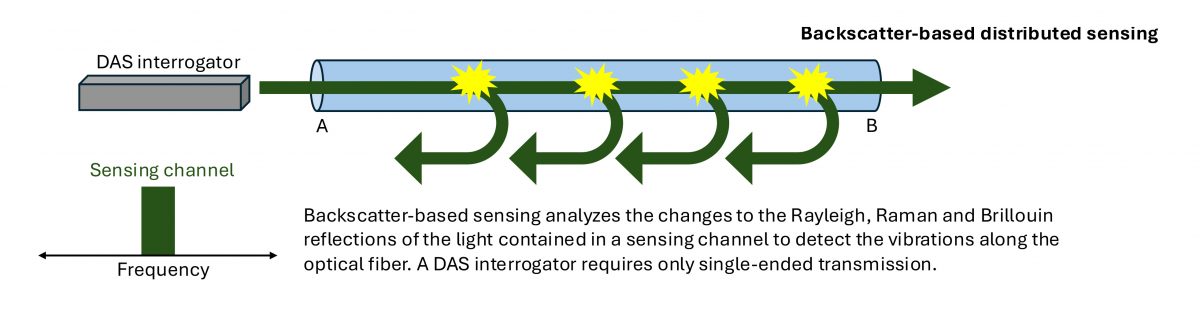
Figure 1. Backscatter-based distributed sensing.
Forward-based DFOS, which Figure 2 shows, excels in long-distance sensing and seamless compatibility with existing optical amplifiers. By leveraging coherent transceivers already deployed in high-capacity networks, this approach enables operators to extract sensing information from the same signals used for data transmission, without requiring additional hardware.
This integration minimizes cost, simplifies deployment and opens the door to advanced analytics over hundreds of kilometers, making it ideal for large-scale infrastructure monitoring and proactive maintenance.
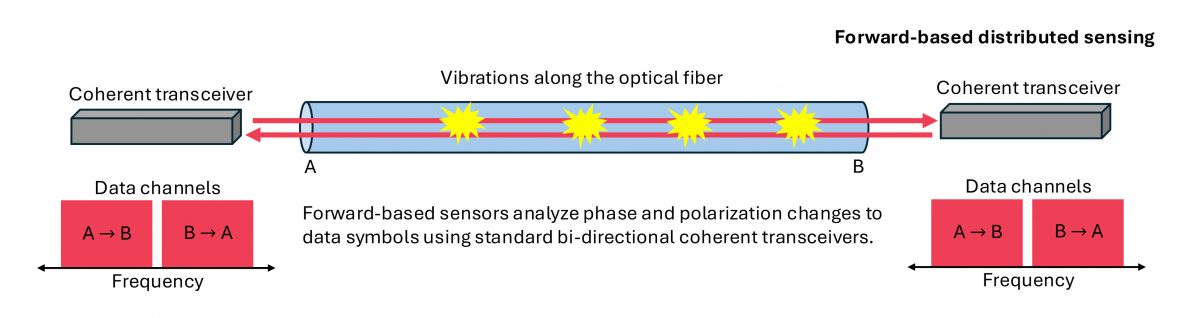
Figure 2. Forward-based distributed sensing.
Cable Networks as City-Wide Sensor Arrays
Imagine a city in which every fiber strand doubles as a sensor. With DFOS, this vision becomes reality. Cable operators can leverage their extensive fiber deployments to create ubiquitous sensing coverage. Bundled fiber paths traversing urban landscapes can detect vibrations, temperature changes and other anomalies — enabling smarter cities and safer infrastructure.
The “Network as Sensors” concept enabled by DFOS transforms optical fibers into thousands of sensing elements, enabling real-time monitoring of large-scale environments and infrastructure.
Real-World Impact: Field Trials and Use Cases
DFOS is already proving its value in the field for proactive maintenance, urban monitoring, environmental sensing and security applications.
Detecting early signs of fiber damage or accidental cable breaks is a key use of DFOS technology. It helps identify unusual activity near critical fiber links, allowing network operators to take preventive action before failures occur.
Researchers have demonstrated this capability using advanced transceivers on long-distance fiber links in real-world network environments. In one case, a DFOS system detected clear polarization changes several minutes before a buried cable was accidentally damaged during construction activity. Such early-warning signals, combined with advanced coherent transceivers, can improve network stability by enabling proactive rerouting and fault prevention.
DFOS is well-suited for cities, where existing fiber networks can be used to monitor traffic, construction and infrastructure conditions in real time. Its continuous, high-resolution sensing helps improve safety and resilience by spotting early signs of damage or stress in urban systems.
Recent studies in cities such as Hong Kong have shown that DFOS can identify and track vehicles based on their unique vibration patterns near roadside fibers. Combining acoustic vibration and temperature sensing has also proven effective for detecting underground issues, such as damaged or flooded cables, and showed strong potential for improving network reliability.
DFOS offers powerful capabilities for environmental and geophysical monitoring by transforming standard optical fibers into dense, real-time sensor arrays. It can detect and localize ground vibrations, temperature changes and strain along vast lengths of deployed fiber, making it ideal for monitoring earthquakes, landslides, permafrost thaw, subsea tsunamis and subsurface hydrological processes. DFOS allows researchers to observe dynamic environmental changes over time and across large areas. This enables early warning systems, long-term climate studies and enhanced understanding of natural hazards in both remote and populated regions.
DFOS can enhance security around critical infrastructure by complementing traditional tools like cameras, radar and lidar. Using vibration data along network fibers, it can detect and classify mechanical threats such as jackhammers or excavators. Researchers have shown that machine learning (ML) techniques, including transfer learning, can achieve high accuracy when analyzing these signals. This demonstrates that DFOS can reliably identify various types of mechanical activity, even when trained on limited or noisy data.
Overcoming Challenges and Looking Ahead
Although DFOS offers immense promise, several hurdles remain.
- Integrating sensing with live data traffic. The ultimate goal of fiber sensing is to use existing optical fiber networks to send data and sense environmental changes at the same time. However, DFOS systems still rely on unused “dark” fibers because combining sensing with live data traffic is difficult. Early tests showed that strong sensing pulses caused errors in nearby data channels. These high-power signals create interference through nonlinear effects, so the spacing between sensing and communication channels must be carefully controlled.
- Deploying in PONs. It’s challenging to integrate traditional DFOS techniques into access networks, such as passive optical networks (PONs), which employ passive power splitters to connect multiple homes and businesses to the internet. This is because the backscattered signals from various drop fibers of the splitters superimpose at the trunk fiber before being detected at the optical line terminal.
- Reducing interrogator costs. Most DFOS interrogators available today are costly because they’re designed for long-range operation, high optical power and specialized industrial applications such as oil and gas, security, and geophysical sensing. To enable broader deployment in communication networks, the technology must be scaled by reducing the per-unit cost and optimizing the design for operator-focused use cases.
- Training ML models on rare events. Training ML models to spot important events in DFOS data is key to realizing the full potential of fiber sensing, especially for rare but critical issues like early fiber damage or breaks. The challenge is that DFOS systems generate huge amounts of data, most of which come from harmless background noise. For instance, a system monitoring tens of kilometers of fiber can produce terabytes of data every day. As a result, meaningful events are buried in a sea of routine data, making it hard for ML models to learn what truly matters.
CableLabs is tackling these challenges with pioneering approaches:
- Coexistence strategies. A novel method enables sensing on active fiber networks without compromising broadband data channels. By using only a fraction of the fiber spectrum, operators can embed distributed sensors into live networks, eliminating the need for dedicated fiber strands and unlocking cost-effective scalability.
- Low-power coded sequences. CableLabs has demonstrated techniques that allow sensing signals to coexist seamlessly with traditional data channels, paving the way for integration without service disruption and enabling self-learning networks.
- Adaptive sensing algorithms. Leveraging AI and ML, these algorithms dynamically adjust to changing environments, improving detection accuracy and reducing false positives.
The cable industry now has a unique opportunity to lead in shaping sensing frameworks and driving global standards.
Join the Sensing Revolution
DFOS is more than a technical innovation; it’s a strategic asset for cable operators. By transforming fiber into a sensing platform, the industry can unlock new capabilities in resilience, intelligence and environmental awareness.
CableLabs invites operators, vendors and researchers to collaborate on field trials, standards development and commercialization strategies. Whether you're exploring sensing-as-a-service models or integrating AI-driven analytics, now is the time to engage. Reach out to us, Dr. Steve Jia and Dr. Karthik Choutagunta, to get started.
The future of cable isn’t just about faster speeds. It’s about smarter, more intelligent networks that anticipate, adapt and protect. CableLabs’ vision is to transform connectivity into a platform for innovation, where networks do more than transmit data: They sense, learn and respond in real time.
Wired
Thinking Outside the Box: Serving MTUs With Fiber


Key Points
- CableLabs’ FTTP Operators Forum brings together industry experts to tackle fiber deployment challenges and accelerate network progress through collaborative problem-solving.
- In a recent meeting, member operators from around the world discussed their approaches to connecting complex, multi-tenant buildings — highlighting regional differences and practical deployment considerations.
When we chartered the FTTP Operators Forum, our goal was to create a space where technology experts, engineers, business leaders and operations professionals could share real-world insights, compare strategies and discuss fiber to the premises (FTTP) challenges. The goal is simple: promote industry collaboration and accelerate progress toward more interoperable, efficient fiber networks.
In our most recent meeting, we saw just how consistently deployments in multi-tenant units (MTUs) pose the same technical and logistical challenges around the world. While these buildings share many similarities, local regulations, construction standards and even cultural factors can shape how operators approach each project. Regardless of geography, the goals remain the same: simplify deployment, improve scalability and deliver reliable, high-speed service.
Beyond Strategy: Practical Realities
In this meeting, North American and European operators discussed their strategies for connecting fiber to units in multi-tenant buildings. Discussions included shared infrastructure designs and the role of coax in hybrid deployments. As an American, I found the European perspective particularly enlightening, highlighting how construction rules in some regions make full-fiber builds more difficult, and how hybrid approaches like mini-Remote PHY Device (RPD) and some new-to-market products are providing practical alternatives.
What stood out was a recurring theme of practicality — how to design and deploy networks that balance performance, cost and ease of installation. Even seemingly small details such as equipment weight, who is responsible for electrical grounding and bonding, and the difficulties of placement in small spaces can have a huge impact on long-term reliability and supportability. These operational insights often get lost in high-level strategy conversations, but they’re essential for successful network rollouts.
As we look ahead to our next session in December — where we’ll dive into passive optical network (PON) evolution and migration paths to 10G, 25G, 50G and even 100G — we’re eager to continue the momentum we’ve built. CableLabs looks forward to continuing these conversations with our member operators to identify not only the technical gaps that need to be addressed, but also the shared priorities that unite them worldwide.
Join Us in Shaping the Future
Every meeting like this reinforces why I stay engaged: to listen, to learn and to help solve the technical and operational challenges that operators face every day. Innovation in this space continues to accelerate, and it’s exciting to be part of a community working together to make fiber networks better for everyone.
CableLabs remains committed to fostering collaboration across the industry, uniting diverse operator perspectives to accelerate progress toward interoperable, high-performing fiber networks.
Feeling left out? We invite you to bring your fiber expertise to the table and help drive real-world innovation in next-generation FTTP networks — join the FTTP Operators Forum!
Wired
Coherent Optics in 2025: Scaling Speed, Efficiency and Reliability for Emerging Applications

Key Points
- Coherent optics is expanding beyond traditional long-haul networks into metro, data center interconnect, fiber access and even space-based satellite communications, driven by AI workloads and bandwidth demand.
- CableLabs has helped pioneer the next frontier of optical communications with specifications for interoperable coherent optics in access networks and the industry's first coherent passive optical network architecture and technologies.
The optical communications industry is undergoing a profound transformation. As bandwidth demands surge — driven by AI workloads, cloud-scale data centers and global satellite connectivity — coherent optics has emerged as the foundational technology enabling this next wave of innovation. From long-haul networks to metro, access, data center and even space-based links, coherent optics is redefining how we transmit data optically.
CableLabs has been instrumental in shaping this revolution, pioneering advancements in point-to-point and point-to-multipoint coherent architectures that enable greater efficiency and scalability in the optical access networks.
About a decade and a half ago, long-haul optical networks relied on Intensity Modulation and Direct Detection (IM-DD), effectively constrained to 10 Gbps, or 10G, per wavelength. Dispersion and polarization effects required complex compensation, and scaling was difficult.
The first real-world deployments of coherent optics around 2010 changed everything. By leveraging amplitude, phase and polarization — alongside powerful coherent detection and digital signal processing (DSP) — coherent systems unlocked 100G, 400G, 800G and now 1.6 Tbps transmission rates per carrier, with dramatically improved reach, spectral efficiency and capacity.
Coherent optics delivers transformative advantages across multiple dimensions:
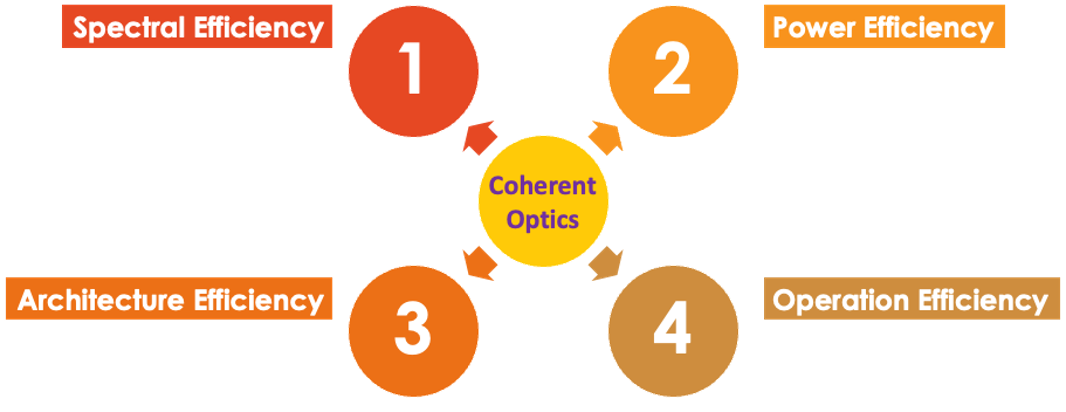
- Spectral efficiency: Maximizes data throughput over a given spectrum, increasing overall network capacity.
- Power efficiency: Reduces energy consumption per bit transmitted, making networks more sustainable.
- Architectural efficiency: Supports flexible and scalable network designs, accommodating diverse deployment scenarios.
- Operational efficiency: Simplifies network management and provisioning, enabling easier scaling and maintenance.
The Building Blocks of Coherent Optics
What began as bulky 100G embedded modules consuming 80 watts have evolved into thumb-sized quad small form-factor pluggable (QSFP) transceivers consuming as little as 5 watts for 100G coherent in access applications. This miniaturization enables direct integration into routers and switches, transforming deployment models across network segments.
Modern coherent optical transceivers achieve unprecedented performance and efficiency through deep integration of electronics and photonics. The key building blocks are included in the diagram below.
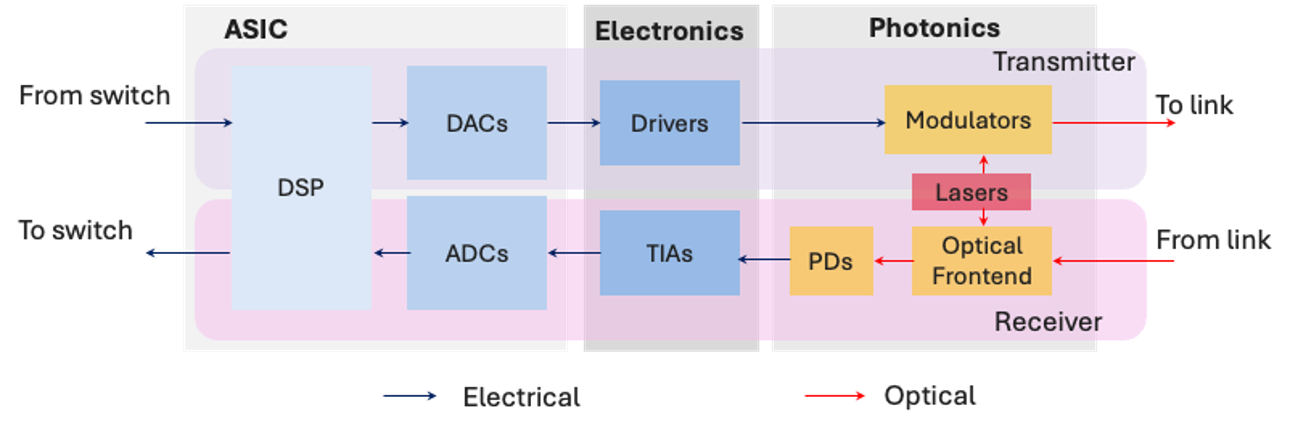
At the core, complementary metal-oxide semiconductor (CMOS)-based Application-Specific Integrated Circuits (ASICs) and DSP enable high-speed signal processing and advanced modulation formats. These are paired with high-speed analog-to-digital converters (ADCs) and digital-to-analog converters (DACs) — now sampling at rates exceeding 300 gigasamples per second (GS/s) — to support ultra-high-capacity links such as 1.6T ZR.
Optical and electronic components are increasingly co-packaged, combining modulators, photodiodes (PD), drivers and transimpedance amplifiers (TIAs) into compact assemblies that reduce footprint and power consumption. Stable and tunable laser sources in the C- and O-bands provide multi-channel transmission capability, while advanced packaging techniques — such as wafer-level integration and liquid cooling — preserve signal integrity and thermal stability.
This holistic approach to integration not only minimizes size and cost but also enables scalable architectures for next-generation optical networks.
Technology Trends Shaping the Future
Several trends are accelerating coherent optics innovation:
- Baud and data rates: The industry surpassed 1 Tbps per carrier in 2022, with multi-carrier architectures pushing toward 3.2 Tbps.
- CMOS Moore’s Law: Continued CMOS scaling drives higher integration and lower power, with 3 nanometer (nm) nodes today and 2 nm on the horizon.
- DSP advancements: Techniques like probabilistic constellation shaping (PCS), equalization-enhanced phase noise (EEPN) equalization, digital subcarriers and advanced forward error correction (FEC) bring performance closer to Shannon’s limit (i.e., the maximum theoretical capacity at which data can be transmitted).
- Optical materials: Thin-film lithium niobate (TFLN), polymers, silicon-organic and plasmonic-organic hybrids (SOH/POH), and barium titanate (BTO) are enabling next-generation modulators for higher bandwidth and lower power consumption with compact integration compatibility.
- Laser innovation: Recent advances in laser technology are driving a shift toward low-phase-noise, high-output and cost-effective tunable and fixed lasers.
Expanding Applications: From Core to Edge — and Beyond
Coherent optics was first deployed in long-haul networks because it solved critical challenges that IM-DD could not. Today, it’s everywhere due to technology maturation, bandwidth demand and the whole ecosystem support:
- Regional and metro networks: Supporting regional connectivity with high capacity and flexibility.
- Data center interconnect (DCI): AI-driven workloads demand massive bandwidth; pluggable modules like 400ZR and 800ZR are now standard.
- Access networks: Coherent optics is now deployed at the edge, with interoperable 100G and 200G P2P transceivers reducing cost, power and complexity in fiber access environments.
- Free space optics: Coherent transceivers now enable high-speed laser links between low-earth orbit (LEO) satellites, supporting global broadband coverage.
What’s Next?
Innovation isn’t slowing down. Coherent optics is poised to move deeper into the network:
- Coherent Lite: Low-power, short-reach solutions are ideal for campus and urban deployments (up to 20 km).
- Inside the data center: As speeds climb, coherent optics may be co-packaged with switch silicon to overcome optical loss and scale bandwidth.
- Next-gen passive optical networking (PON): Coherent optics is redefining passive optical networks with higher speeds, longer reach and new architectures that support both P2MP and legacy coexistence.
CableLabs Is Leading the Coherent Frontier
While coherent optics continues to expand across the network, CableLabs is leading the charge to define what’s next. Our specifications for P2P coherent optics have enabled interoperable 100G and 200G transceivers optimized for access networks — already deployed by major operators to extend fiber reach and reduce cost, power and complexity.
We also introduced the industry’s first architecture and technologies for coherent passive optical networks (CPON), supporting 100G per wavelength with up to 512-way splits or 80 km reach. CPON enables seamless coexistence with legacy PON and P2P coherent systems, unlocking new possibilities for residential, enterprise and wireless transport.
As coherent optics moves deeper into the network, we invite the industry to collaborate with CableLabs on specifications, interoperability and deployment strategies that will shape the next decade of optical innovation.
Wired
PON Event Continues to Explore and Evolve Equipment Interoperability

Key Points
- This summer’s CableLabs PON Interop·Labs event brought together OLT and ONU suppliers to test the device interoperability aspects of the I02 version of the Cable OpenOMCI specification.
- This was the latest in a series of events hosted by CableLabs as part of our quest to build a healthy, diverse and interoperable XGS-PON supplier ecosystem.
The latest CableLabs Interop·Labs CPMP XGS-PON event took place Aug. 4–7 in our Louisville, Colorado, labs and was designed to test the ONU Management and Control Interface (OMCI). The event focused on exercising a core subset of the OMCI requirements defined by a combination of the ITU-T Recommendation G.988 and CableLabs’ Cable OpenOMCI specifications. For background on the importance of OMCI interoperability testing and the genesis of the Cable OpenOMCI specification, please see my blog post, “Driving Alignment: New Progress Toward XGS-PON Equipment Interoperability” (May 2025).
This was the second interop event at which we tested the OMCI layer via pairings of optical line terminals (OLTs) and optical network units (ONUs) from various suppliers. And for this event, supplier engineers executed test cases designed to exercise requirements from the I02 version of the Cable OpenOMCI specification, published in July 2025.
Supplier Participation at the XGS-PON Interop
For the August event, we hosted an array of ONU suppliers, who brought a variety of devices to test. These suppliers and devices included:
- Calix — ONU and gateway
- Ciena — multiple ONU models
- Comtrend — ONU
- Hitron — ONU
- Nokia — multiple ONU models
- Sagemcom — ONU and gateway
- Ubee — multiple gateway models
Also for this event, we hosted our largest number of OLT suppliers yet. OLT suppliers on hand were:
- Calix — AXOS E7-2 OLT
- Ciena — Tibit MicroPlug OLT
- Harmonic — Pier OLT
- Nokia — Lightspan MF-2 OLT
Some of the OLT suppliers also made use of their DOCSIS Adaptation Layer capabilities to help streamline ONU service provisioning in the lab.
Interop Test Plan Evolution
For the interoperability event, the test setup was duplicated on each participating OLT supplier workbench. A small-scale PON optical distribution network (ODN) was built on each workbench, connecting the supplier’s OLT to one or more ONUs under test. The OLT supplier made use of its OLT’s logging and debugging capabilities or the lab’s XGS-PON analyzer equipment to record the results of each OMCI test case.
Interested participating suppliers met a few weeks in advance of the event to update the test plan, based on changes from the I02 specification and from lessons learned from previous events. In addition to the five test cases described in my May blog post, the interop test plan for this event was extended to include test cases for ONU time synchronization and access network interface optical power levels.
Overall results from the interoperability events continue to be encouraging. Suppliers have taken lessons learned from previous events and made improvements to their software implementations. Testing at this particular event showed the resolution of previous issues but also uncovered new ones.
Continuous Improvement Cycle
As a next step, the CableLabs CPMP working group will discuss the findings from this event and, if necessary, define solutions for those issues in the form of engineering change requests against the published Cable OpenOMCI I02 specification.
Once significant engineering changes have been incorporated into that version, we’ll issue an I03 version of the spec. In some cases, the working group may determine that a discovered issue would be best addressed in the ITU-T space. In those cases, a working group member company will deliver a proposal to the ITU-T Study Group 15, Question 2 working group for consideration as a change to G.988.
See You In November
CableLabs is planning another PON Interop·Labs event the week of Nov. 3. Details of that event will be made available as we get closer to that week.
We plan to welcome OLT and ONU suppliers back to our lab to exercise the interoperability aspects of the I03 version of the Cable OpenOMCI specification. We expect to have an updated interop test plan (based on the I03 version) available to participants in advance of the November event.
Wired
From If to When: What’s Next for Coherent PON?


Key Points
- The perception of coherent passive optical network (CPON) technology has evolved from if to when and how, with momentum accelerating throughout the broadband industry.
- Through collaborative development and industry-wide engagement, CPON is positioned to become a foundational technology for scalable, high-performance broadband networks of the future.
There are a lot of reasons to attend an industry conference. To name just a few, events like SCTE TechExpo or the recent CableLabs Winter Conference provide opportunities to:
- Learn about the latest technology research.
- Discover emerging products.
- Network with colleagues.
- Identify technology trends.
The last of these was very much evident at this year’s Optical Fiber Communications (OFC) conference, the world's leading event for fiber optic technologies, where there was a palpable shift in how CPON technology is being viewed. In past years, much of the conversation has centered around if coherent optics technology could viably and practically be applied to passive optical networks. This year, it was much more about when the technology would come to market and how to make it cost effective.
What was once a forward-looking vision is evolving into a real-world opportunity with long-term potential.
CPON, a mainstay in CableLabs’ optical fiber portfolio, is entering a new, more active phase of industry planning. Network operators are exploring opportunities to implement it sooner rather than later, and the broader ecosystem — including vendors and standards bodies — is also signaling interest.
We’ve often seen the technology talked about in the context of long-term evolution, but it also holds the potential to solve immediate challenges for operators. With speed no longer a key service differentiator, providers are tasked with delivering superior online experiences and services that adapt to the needs of the user.
CPON technology contributes to experience and adaptability by enabling:
- Lower latency.
- Streamlined integration with existing architectures.
- Simplified, cost effective capacity scaling.
- Reduced operational complexity.
These capabilities parallel the Technology Vision for the industry, which emphasizes competitiveness, scale and alignment across the ecosystem while also cultivating next-generation technology solutions.
What Is Coherent PON, and How Did We Get Here?
Amid ever-increasing demands for a faster, more reliable exchange of data, PON technologies remain one of the dominant architectures capable of meeting that growth. Existing PON technologies transmit data over fiber optic cables using a technique known as Intensity Modulation – Direct Detect (IM-DD), which has proven to be a simple, cost-effective means of supporting multiple users over a shared optical data network (ODN).
However, there’s a problem. As speeds ramp up higher and higher, IM-DD based PON solutions require more and more power, require more complicated signal processing, have more limitations on operating frequencies, and can only reach more limited distances. As capacity increases, IM-DD is no longer the simple, cost-effective solution it was before.
So, what’s the alternative?
Coherent optics is an advanced fiber optic technology, which uses coherent modulation and detection to transmit more data for a given unit of time with greater sensitivity over longer distances than comparable IM-DD solutions. Coherent optics has long been used for point-to-point connections in submarine, long-haul and metro networks. More recently, it has begun to be applied to the access network as well, driven in part by work done by CableLabs to demonstrate that it can be a practical, cost-effective solution with a wide range of benefits.
CPON, for the first time, applies coherent optics technology to PON, resulting in a whole host of benefits.
Compared with traditional PON technologies, CPON solutions enable data transmission rates starting at 100 Gbps upstream and downstream — with the ability to easily scale to even higher capacities — while covering greater distances with better signal quality. This combination allows CPON systems to support more users and services on the same network.
More than simply an upgrade in speed and capacity, CPON technology also enables a shift in how networks are built. Combined with expanded, scalable capacity and ultra-low latencies, CPON technology also expands the services that can be provided over those networks. This enables CPON to provide a foundation for scalable service delivery across increasingly complex network architectures. As operators shift their network strategies to include a mix of technologies — hybrid fiber coax (HFC), fiber, wireless and even satellite — the technology is emerging as a key enabler of unified, flexible architectures.
Coherent PON On the World Stage
While CPON has long been a priority within CableLabs’ optical strategy, it’s exciting to see the broader industry begin to take notice, too.
As we mentioned earlier, the energy around CPON was especially visible this year in San Francisco at OFC 2025. We saw a significant uptick in technical contributions related to coherent technology, providing further proof that momentum is building beyond CableLabs’ own efforts. Multiple sessions, presentations and demos focused on coherent optics and access network applications, drawing particular interest from network operators considering new avenues to rethink network design and service delivery.
The event made it clear that coherent technology has entered mainstream planning discussions for PON. The increase in engagement signals a growing recognition that CPON is becoming a necessary component of next-generation broadband strategy. Much more importantly, it demonstrates the industry’s collective commitment to moving the technology forward.
Additionally, even as CPON gains more attention from the broader industry, CableLabs continues to serve as a leader in advancing this technology. At OFC 2025, our CableLabs working group participants were particularly productive, covering next-gen PON solutions generally and CPON technology and solutions specifically in several engaging talks (both invited and contributed) as well as panel discussions. Here are some of the highlights from the PON-related contributions presented by our working group collaborators:
- Single-Laser BiDirectional Coherent PON: a Hybrid SC/DSC Architecture for Flexible and Cost-Efficient Optical Access Networks — Showcased a novel single-laser BiDirectional CPON capability featuring hybrid single-carrier and dual-subcarrier support.
- Low-Complexity 100G Burst-Mode TDMA-CPON Transmission Achieving 38 dB Link Budget — Experimentally demonstrated practical 100 Gbps burst-mode coherent transmission and reception without optical amplification.
- Robust Colorless Coherent Receiver for Next-Generation PONs: Coexistence With Legacy Systems and Multi-Wavelength Operation — Explored a colorless coherent receiver designed for next-generation PONs, emphasizing its ability to coexist with legacy PONs and support multi-wavelength operation.
- Crafting Fiber Access Networks for Service Excellence Assurance — Provided in-depth analysis and insights into the evolving landscape of fiber access networks.
- Harmony From Chaos: Orchestrating and Interoperable Ecosystem for the Future of PON — Explored standards and strategies for streamlined future-ready deployment and management across diverse vendor systems.
- Out of the Darkness: A Sneak Peek at CableLabs’ CPON Specifications — Covered how CPON is shifting from feasibility to implementation.
Accelerating Adoption Through Collaboration
Together with our member operators and vendor community, we’re actively shaping the direction of CPON technology. A CableLabs-led working group continues to advance this effort, with a shared goal of moving CPON from specification to broader adoption. Our work to develop and refine the suite of specifications is ongoing, and we expect to publicly issue the full suite by the end of 2025.
These working groups play a critical role in building a healthy, collaborative broadband ecosystem: ensuring that resulting solutions align with the real-world needs of both operators and end users, and can be developed and built by manufacturers at a reasonable cost. If you’re a CableLabs member or vendor interested in contributing to this effort, we encourage you to learn more about our working groups and how you can get involved.
Continuing this shared development and ecosystem-wide collaboration is critical, especially as the suite of specifications moves closer to public release and industry interest ramps up.
As CPON systems move closer to widespread implementation, this collaborative model will be key to its success. More than a next-gen PON technology milestone, CPON is a foundation for seamless, scalable connectivity — enabling a faster, more responsive and more reliable broadband experience for the future.
Wired
Driving Alignment: New Progress Toward XGS-PON Equipment Interoperability

Key Points
- A recent CableLabs PON Interop·Labs event brought together OLT and ONU suppliers to test device interoperability and exercise the requirements of the Cable OpenOMCI specification.
- Testing helps equipment manufacturers ensure interoperability among their devices — key to building a healthy, collaborative ecosystem.
With more and more CableLabs member operators deploying or preparing to deploy ITU-T-based passive optical networking (PON) technologies such as XGS-PON, interoperability of equipment from different vendors is more important than ever. One well-known source for the lack of cross-vendor interoperability of XGS-PON equipment stems from differing implementations of the ONU Management Control Interface (OMCI) — primarily specified by ITU-T Recommendation G.988.
Last year, the CableLabs Common Provisioning and Management of PON (CPMP) working group set out to tighten some of the gaps in G.988, via the publication of the first version of the Cable OpenOMCI specification. This specification aims to enumerate the set of management elements from G.988 that are most important to CableLabs member operators and clarify how those elements must be supported in XGS-PON equipment intended for sale to those operators.
At a recent XGS-PON Interop·Labs event at CableLabs, multiple suppliers of PON optical line terminal (OLT) and PON optical network unit (ONU) equipment exercised their gear’s ability to interoperate. It was the industry’s first opportunity to exercise equipment implementations conformant to the requirements defined in the Cable OpenOMCI specification.
But the event, held April 28–May 1 in our Colorado labs, exercised more than just OMCI interoperability. It also included a continuation of the DOCSIS Provisioning of XGS-PON config file interoperability testing, first initiated during our February interop. Please see my blog post from March for a deeper description of the concept of DOCSIS Provisioning of XGS-PON and the scope of that event.
Supplier Participation in the XGS-PON Interop
Interoperability events enable participants to collaborate and problem-solve on specific technologies and goals. The participation of vendors is critical to advancing technology solutions for the entire industry.
Participants at our April Interop·Labs event included XGS-PON OLT suppliers — showcasing their OMCI and DOCSIS Adaptation Layer (DAL) implementations — as well as XGS-PON ONU suppliers, who showcased the OMCI aspects of their ONUs.
These XGS-PON OLT suppliers included Calix, Ciena and Nokia. In particular, Calix tested using their E7-2 OLT and DPx DAL. Ciena brought their Tibit MicroPlug OLT, MCMS controller and DAL system. And Nokia tested using their Lightspan MF-2 OLT and Altiplano controller. While the primary focus of the event was on XGS-PON technology, Ciena also brought their pre-production 25GS-PON OLT and 25GS-PON ONU, and demonstrated DOCSIS provisioning of that equipment, as well as traffic forwarding through it.
In addition to the OLT supplier participants, XGS-PON ONU suppliers in attendance included Askey, Cambridge Industries Group, Hitron, MaxLinear, Sagemcom and Sercomm. While Sagemcom brought an ONU embedded in a residential gateway, most suppliers brought bridging ONUs. Numerous ONUs from additional suppliers (including Calix, Ciena/Tibit and Nokia) were also on hand for interested OLT vendors to test with their OLT and DAL implementations.
The XGS-PON OMCI Test Cases
The OMCI test plan executed during the event was based on the requirements defined in the I01 version of the Cable OpenOMCI specification. Interested OLT and ONU suppliers met over the course of several weeks prior to the event to define the test cases that would be included in the interop test plan.
Following the general contents of the Cable OpenOMCI specification, the following test cases were defined:
- The MIB upload component of OMCI configuration management
- Create and get methods of OMCI configuration management
- Performance monitoring via OMCI
- ONU software image download
- ONU software image activation
During the first three test cases, the lab’s 100GE traffic generation system was used to transmit and receive traffic via a given OLT and ONU combination under test. And during each of the five test cases, an XGS-PON analyzer or OMCI debug capabilities of the OLT were used to capture and examine the message exchanges between the ONU and OLT. One participating OLT vendor indicated that, during the event, they tested with 12 different ONU models, inspecting close to 100 OMCI management elements for each ONU.
The results of the interop testing were encouraging and showed that the participating suppliers have already begun implementing the requirements of the Cable OpenOMCI specification in their software. As expected, the testing also uncovered additional OMCI interoperability issues. Those issues will inform the next set of work items for the CPMP working group to tackle.
New Issues Bring New Fixes
With a wide array of OLT and ONU vendor implementations on hand at the event, new issues were bound to be discovered — which is exactly why we hold interoperability events.
Now, the CPMP working group will discuss our findings and prioritize solutions for them via an engineering change process to the Cable OpenOMCI specification. Fixes for the simpler issues will likely be included in the upcoming release of the I02 version of the spec. More complex issues may take more time for the working group to solve and will therefore be addressed in a later version of the spec.
Join Us Next Time
CableLabs is planning two more PON Interop·Labs events this year, with the next event scheduled for the week of Aug. 4. Stay tuned for more details.
The August event will provide an opportunity for OLT and ONU suppliers to return to test interoperability based on compliance with an anticipated I02 version of the Cable OpenOMCI specification. We also welcome OLT suppliers to return to exercise their DAL solutions for ONU and config file interoperability.
Wired
How We’re Navigating the XGS-PON Interoperability Landscape


Key Points
- Broadband operators are increasingly integrating fiber to the premises into their service portfolios, embracing passive optical network (PON) technology for their fiber-based access networks.
- To optimize PON integration into networks, CableLabs hosts interoperability events to help ensure compatibility between vendor equipment.
There has been momentum in the broadband industry to provide fiber to the premises (FTTP) solutions as a part of an operator’s service portfolio. While optical technologies have long been a part of the cable network, FTTP is the chosen architecture for all-fiber access networks.
For FTTP, the premises can be a subscriber’s home, a commercial location, a campus environment, a multi-dwelling unit (MDU) or another location. Over the past couple of decades, operators have embraced the passive optical network (PON) technology for their fiber-based access network implementations. The point-to-multipoint topology of PON lends itself nicely to the current and future designs of the broadband network.
More recently, many operators have begun deploying PON technologies defined by the International Telecommunications Union Telecommunications Standardization (ITU-T). As a part of its standards development, ITU-T has released standards for 10 Gigabit Symmetrical PON (XGS-PON).
With broadband operators beginning to deploy multiple gigabit service, there’s a growing current of enthusiasm and interest for the efficient deployment, management and maintenance of those access networks. Furthermore, the speed at which technology is moving is impressive and expensive. It is challenging to keep pace with these advancements, which require a matrix of expertise and decision-making support.
Building on PON’s Momentum
PON is one of the technologies that keeps marching forward. CableLabs has participated in the development of PON-based standards and specifications for over a decade, and we’re continuing in that vein to help operators lower barriers for deploying and operating FTTP solutions.
Common provisioning and management of PON in the broadband industry typically requires support of legacy systems that have been in place for decades, e.g., DOCSIS® operations support system (OSS) or integration with newer back-office systems. Near-term objectives for the work CableLabs is beginning include XGS-PON and 25GS-PON support, covering applicability for next-gen PON flavors with special focus on vendor neutrality through device interoperability.
CableLabs has created two working groups dedicated to optimizing the integration of ITU-T PON technologies into cable networks. The two working groups are the Common Provisioning and Management of PON (CPMP) and Optical Operations and Maintenance (OOM). These two groups are complementary in their activities. The CPMP group is focused on supporting the back-office provisioning and management of XGS-PON as well as the interoperability of optical network units (ONUs) with optical line terminals (OLTs). The OOM working group is focused on the operations and maintenance of the underlying optical networks.
Hurdles in Interoperability
There are always tradeoffs with technology, whether it’s price, timing or things out of an operator’s control, such as product availability. However, when customer premises equipment (CPE) is required, there is always an underlying benefit to the interoperability of that device with the network that it connects to.
Interoperability provides necessary competition, which results in pricing benefits, innovation and choice for operators. Having the choice of which ONU is connected to the OLT is instrumental in providing lower cost services with the ability to help foster innovation.
Interoperability involves several technical and logistical challenges. Addressing these hurdles typically involves a combination of adherence to standards, thorough testing and collaboration between vendors to ensure equipment from different manufacturers can work together seamlessly. These hurdles to interoperability include:
- Standardized technology: Standards are not necessarily the end-all-be-all for successful interoperability. In the context of XGS-PON, there is the ONU Management and Configuration Interface (OMCI). This OMCI information is defined in the ITU-T G.988 standard. This is the accepted way to configure and manage ONU equipment via the OLT. OMCI is extremely comprehensive and as such, it is very difficult to provide simple and extensible ways to support interoperability.
- Vendor-specific implementations: Vendors may support proprietary features or extensions in their products. While these can offer enhanced performance, additional functionality and vendor differentiation, they can also create interoperability issues if these features are not supported universally across different vendor equipment.
- Operator requirements: Each operator deployment is different, and each operator requires a specific implementation to support their business objectives. While certain configuration parameters, fault reporting and performance monitoring are common among different implementations, there are always variations, and this requires different configurations for network components and CPE.
- Network configuration, service activation, and management: XGS-PON networks require precise network management and configuration to ensure proper operation. Differences in management systems and configuration approaches between vendors can create integration challenges.
- Testing and certification: Comprehensive testing is required to ensure that equipment from different vendors works together as expected. Many operators and vendors don’t have the infrastructure to support such testing, which becomes a barrier when choosing equipment suppliers. A significant impact on time-to-market is testing. Testing and validation of requirements is a significant cost and effort.
Mitigating Interoperability Hurdles
CableLabs, with the support from vendor partners and member operators, has long had a successful formula for developing specifications that have transferred to CPE interoperability. Device interoperability is the primary objective when producing interface specifications between network components. Vendor neutrality through that device interoperability is a key intention for operators deploying XGS-PON in cable networks.
Developing documentation to standardize technology with the intent for interoperability is a fine line to walk when working with multiple operators and equipment manufacturers. To add fuel to the fire, when standards have already been written, developing a method for interoperability can require modifications to the original formula. By leveraging the existing G.988 OMCI standard, CableLabs is developing a Cable OpenOMCI specification to support ONU configuration in an interoperable way within the industry.
While it is always a goal to develop common processes and requirements that encourage the vendor ecosystem, sometimes vendor-specific parameters are required to support vendor differentiation. It’s important for vendors to differentiate their products, which provides their teams to innovate. The work CableLabs is doing to support device interoperability includes the ability for vendor-specific configurations when needed.
Each operator is different, and each operator has its own set of business objectives that translates to the products it buys, the services it offers, and the networks it builds. When developing specifications to support a myriad of operator requirements that span the globe, we must always be cognizant on ways to support those requirements. During our specification development we work together to identify and accommodate those differences needs across the industry.
While each network is different, for interoperability, some network configuration, service activation, and management must be standardized. This can be required anywhere in the network from the back office all the way to the end of the network with CPE. When building a program to support interoperability this entire ecosystem is in play. The coordination effort and the development of a common set of processes to support interoperability with device configuration, service activation and management is key.
In February, we hosted a DOCSIS® Provisioning of XGS-PON Interop·Labs event for members of the CPMP working group. Testing and certifying devices are very important for interoperability. To help remove the barriers of cost and reduce time-to market with comprehensive testing, CableLabs provides formal interoperability events like this as well as ongoing interoperability activities. Additionally, if needed, CableLabs will develop a certification program to test and certify ONUs against the specification.
Pushing Toward XGS-PON Adoption
While XGS-PON is gaining interest with cable operators, the industry is keen to develop procedures and specifications to support ONU interoperability with OLTs. While there are always common hurdles to interoperability, they are never enough to stop interoperability. Since the XGS-PON technology has already been defined and standardized by ITU-T, this does bring a different hurdle to the work.
Typically, CableLabs and its vendor partners and member operators develop the specifications that support interoperability. However, in this instance, we must leverage existing standards from another SDO. It won’t be impossible, but it will be a heavy lift.
Learn more about our working groups and how CableLabs members and our vendor community can help us chart the way forward for technologies like this.