


HYBRID FIBER-COAXIAL (HFC) NETWORKS
Delivering Services That Consumers Want Today
In a world of uncertainty, one thing will never change: Cable broadband will continue to provide the unmatched reliability, flexibility and scalability that our customers need today, tomorrow and in the future.
Serving All Your Broadband Needs
Even before COVID-19 rapidly accelerated broadband traffic, cable’s robust HFC networks were ready to take on future demand. Cable operators’ continuing investment in their networks has significantly improved network performance on all fronts: speed, latency, security and reliability. Now individuals and corporations can access vital internet services that allow them to continue working and learning remotely without skipping a beat.
Responding to Covid-19
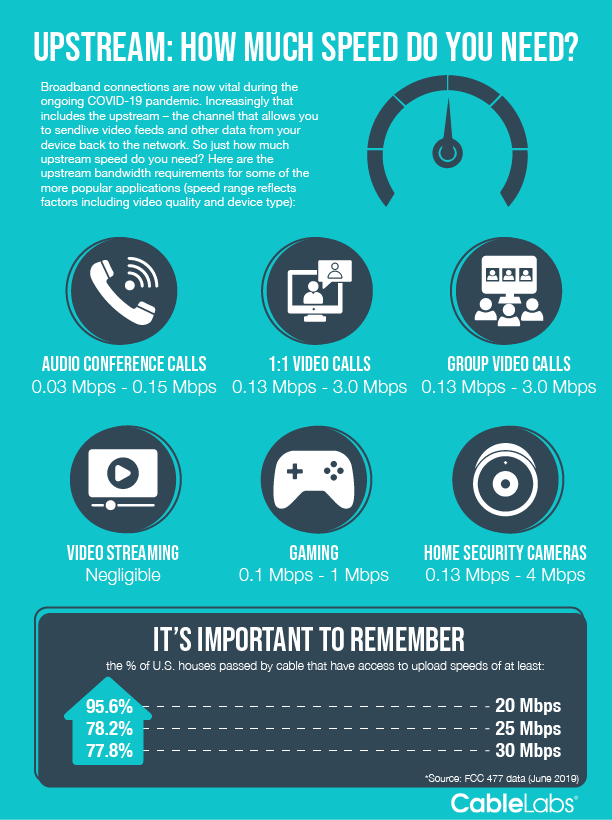
Upstream internet traffic remains significantly elevated compared with pre-pandemic levels. Cable networks have been able to handle this increased traffic, aided by the fact that popular upstream-dependent applications require relatively modest bandwidth. Learn more about what the cable industry is doing at the NCTA dashboard.
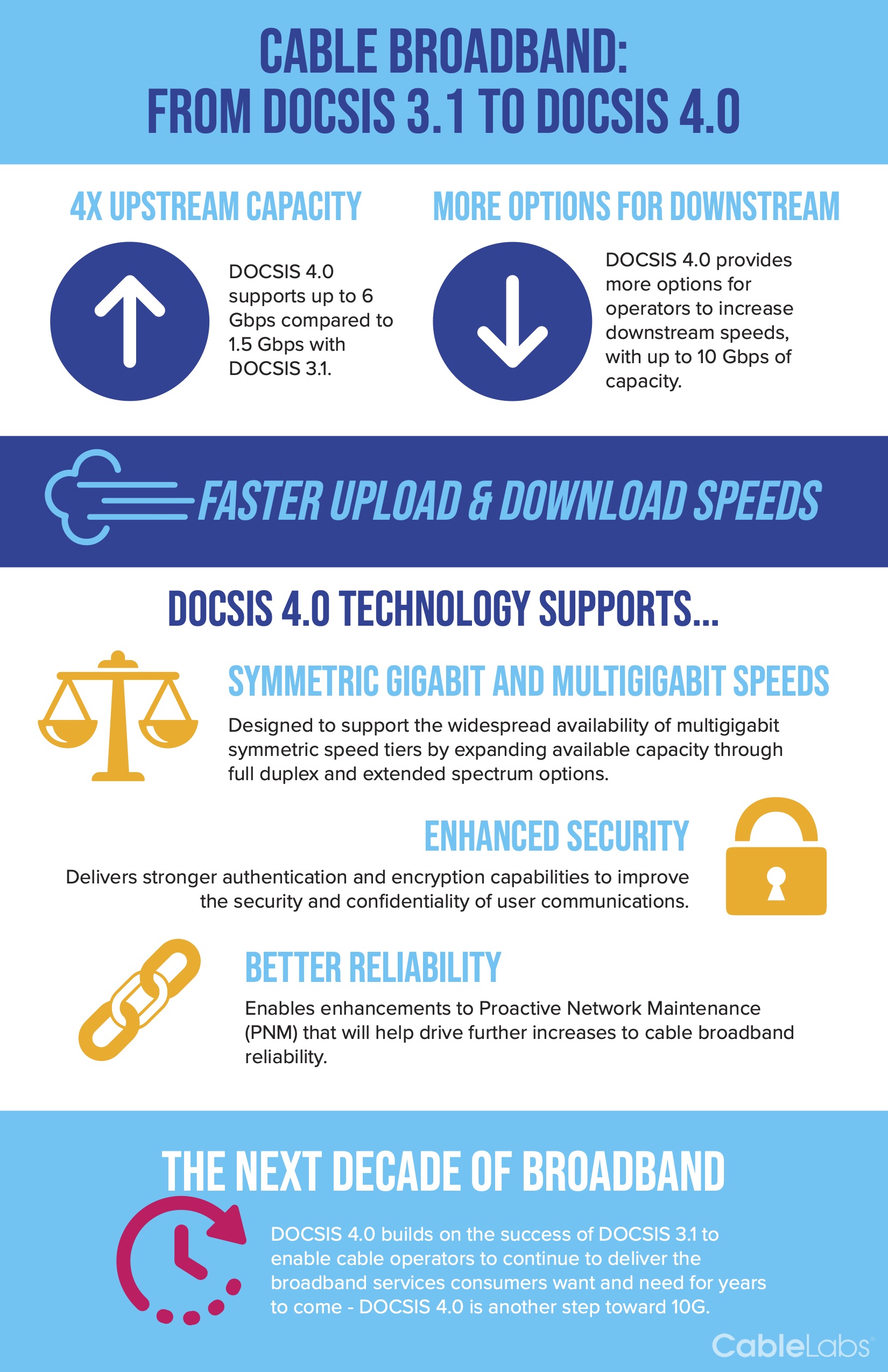
Key Facts About the Cable Industry

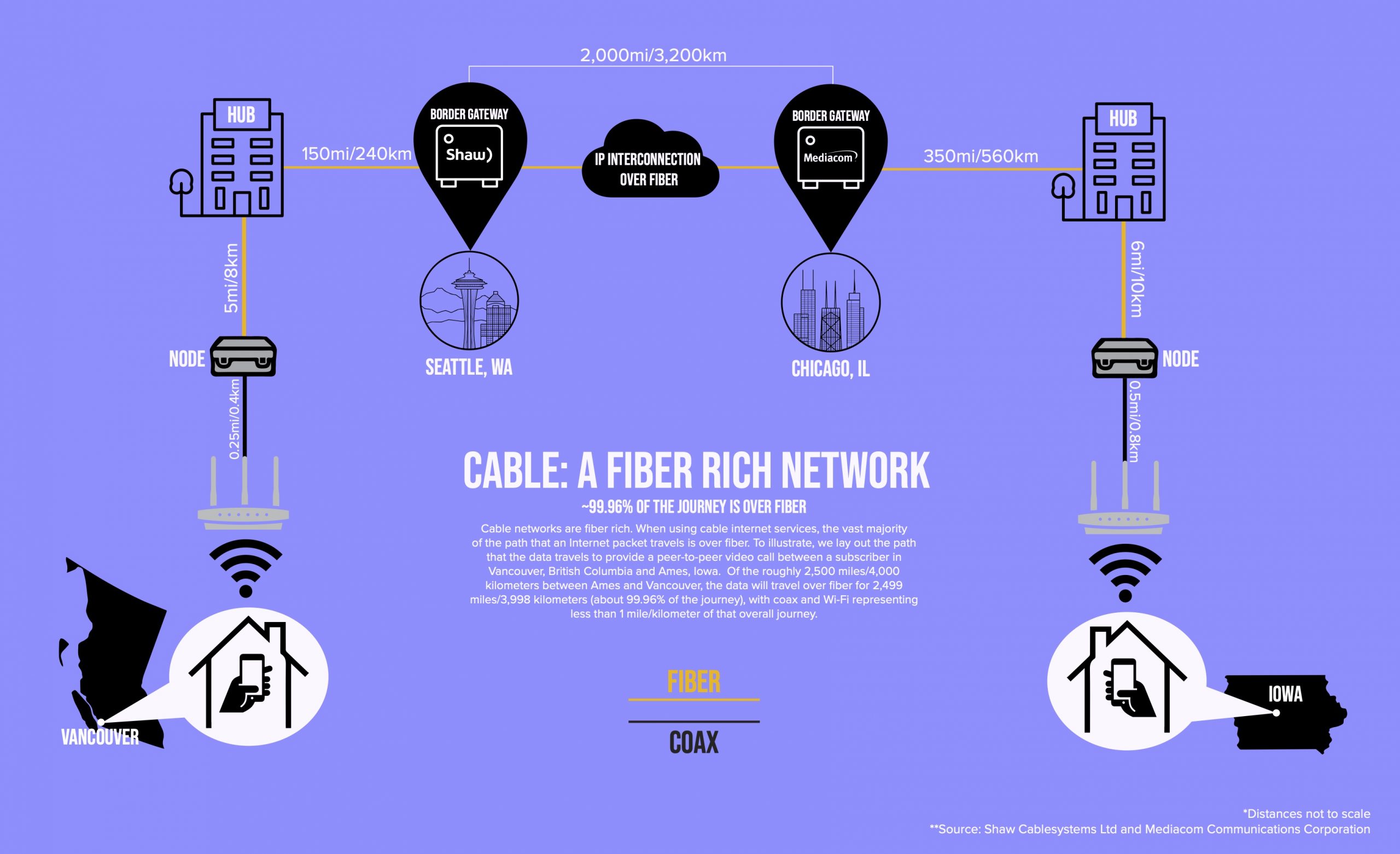
Cable Networks Are...


Now more than ever, network security and reliability are essential to building successful remote working and learning environments. Technologies such as advanced Proactive Network Monitoring (PNM) and CableLabs Micronets—a highly adaptive enterprise-level security solution for home networks—will help make your existing home broadband connection a safe and reliable extension of your school or corporate office. Plus, we’re working with the Open Connectivity Foundation (OCF) and Connected Home over IP Project (CHIP) on increasing the security of various Internet of Things (IoT) devices that often create vulnerabilities in home networks.
The cable industry’s 10G goal is based on tapping into the almost unlimited potential of the existing HFC footprint. We have the infrastructure and technologies to ramp up to multi-gig symmetrical speeds, drive down latency and ensure that our cable networks have more than enough capacity to meet the demand of future innovations. Now it’s all about assembling the correct technology toolset—DOCSIS® 4.0 technology, Low Latency DOCSIS, Profile Management Applications and more—to get to 10G and beyond.
No matter what the post-COVID world will look like, we’ll continue making sure our networks are ready. We’re constantly engaged with next-generation application developers and future-tech organizations, such as the Immersive Digital Experiences Alliance (IDEA), to better understand the speed and latency requirements of light-field displays and other emerging applications. Judging by our current trajectory, such applications might become our way of life sooner than we thought.
Related Resources
Document
10G: Enabling Future-Ready Networks
Document
10G: The Next Great Leap in Broadband
Document
Assessing the Economic Potential of 10G Networks