



As cable networks evolve to meet the demands of next-generation connectivity, a quiet transformation is unfolding within the fibers that carry our data.
Distributed fiber optic sensing (DFOS) is emerging as a transformative technology that enables real-time environmental awareness, infrastructure monitoring and intelligent network optimization — all using the existing fiber infrastructure.
This sensing revolution reflects broader industry trends toward full automation, digital network twins and pervasive sensing in CableLabs’ Technology Vision, positioning cable networks as foundational platforms for intelligent and adaptive connectivity.
What Is Distributed Fiber Optic Sensing and Why Does It Matter?
DFOS turns standard optical fibers into thousands of sensors capable of detecting acoustic, thermal and mechanical disturbances. This capability allows operators to monitor their networks proactively, detect threats before they cause damage and even gather insights about the surrounding environment.
Two main approaches — backscatter-based and forward-based sensing — offer complementary strengths.
Backscatter systems, illustrated below in Figure 1, offer high spatial resolution and single-ended deployment, operating by transmitting laser pulses through the fiber and analyzing subtle variations in the reflected light. These changes carry unique signatures of acoustic, thermal or mechanical disturbances along the fiber.
The term “distributed” means that measurements are captured continuously along the entire length of the optical fiber (not just at discrete points), turning a single fiber strand into thousands of sensing locations.
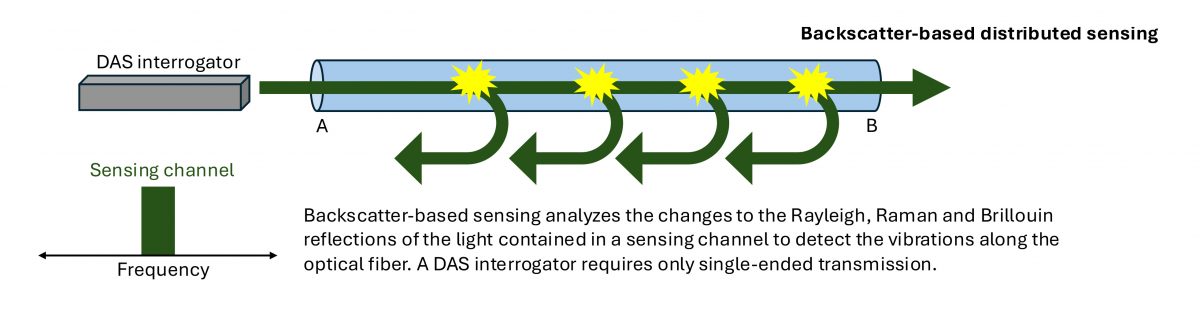
Figure 1. Backscatter-based distributed sensing.
Forward-based DFOS, which Figure 2 shows, excels in long-distance sensing and seamless compatibility with existing optical amplifiers. By leveraging coherent transceivers already deployed in high-capacity networks, this approach enables operators to extract sensing information from the same signals used for data transmission, without requiring additional hardware.
This integration minimizes cost, simplifies deployment and opens the door to advanced analytics over hundreds of kilometers, making it ideal for large-scale infrastructure monitoring and proactive maintenance.
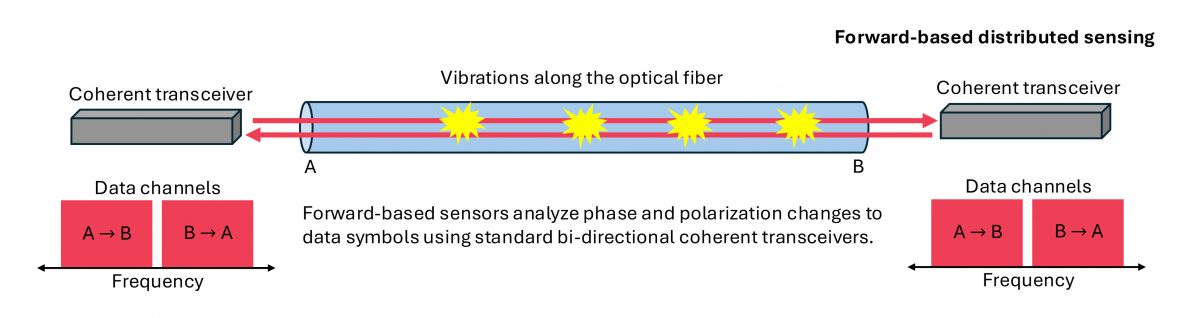
Figure 2. Forward-based distributed sensing.
Cable Networks as City-Wide Sensor Arrays
Imagine a city in which every fiber strand doubles as a sensor. With DFOS, this vision becomes reality. Cable operators can leverage their extensive fiber deployments to create ubiquitous sensing coverage. Bundled fiber paths traversing urban landscapes can detect vibrations, temperature changes and other anomalies — enabling smarter cities and safer infrastructure.
The “Network as Sensors” concept enabled by DFOS transforms optical fibers into thousands of sensing elements, enabling real-time monitoring of large-scale environments and infrastructure.
Real-World Impact: Field Trials and Use Cases
DFOS is already proving its value in the field for proactive maintenance, urban monitoring, environmental sensing and security applications.
Detecting early signs of fiber damage or accidental cable breaks is a key use of DFOS technology. It helps identify unusual activity near critical fiber links, allowing network operators to take preventive action before failures occur.
Researchers have demonstrated this capability using advanced transceivers on long-distance fiber links in real-world network environments. In one case, a DFOS system detected clear polarization changes several minutes before a buried cable was accidentally damaged during construction activity. Such early-warning signals, combined with advanced coherent transceivers, can improve network stability by enabling proactive rerouting and fault prevention.
DFOS is well-suited for cities, where existing fiber networks can be used to monitor traffic, construction and infrastructure conditions in real time. Its continuous, high-resolution sensing helps improve safety and resilience by spotting early signs of damage or stress in urban systems.
Recent studies in cities such as Hong Kong have shown that DFOS can identify and track vehicles based on their unique vibration patterns near roadside fibers. Combining acoustic vibration and temperature sensing has also proven effective for detecting underground issues, such as damaged or flooded cables, and showed strong potential for improving network reliability.
DFOS offers powerful capabilities for environmental and geophysical monitoring by transforming standard optical fibers into dense, real-time sensor arrays. It can detect and localize ground vibrations, temperature changes and strain along vast lengths of deployed fiber, making it ideal for monitoring earthquakes, landslides, permafrost thaw, subsea tsunamis and subsurface hydrological processes. DFOS allows researchers to observe dynamic environmental changes over time and across large areas. This enables early warning systems, long-term climate studies and enhanced understanding of natural hazards in both remote and populated regions.
DFOS can enhance security around critical infrastructure by complementing traditional tools like cameras, radar and lidar. Using vibration data along network fibers, it can detect and classify mechanical threats such as jackhammers or excavators. Researchers have shown that machine learning (ML) techniques, including transfer learning, can achieve high accuracy when analyzing these signals. This demonstrates that DFOS can reliably identify various types of mechanical activity, even when trained on limited or noisy data.
Overcoming Challenges and Looking Ahead
Although DFOS offers immense promise, several hurdles remain.
- Integrating sensing with live data traffic. The ultimate goal of fiber sensing is to use existing optical fiber networks to send data and sense environmental changes at the same time. However, DFOS systems still rely on unused “dark” fibers because combining sensing with live data traffic is difficult. Early tests showed that strong sensing pulses caused errors in nearby data channels. These high-power signals create interference through nonlinear effects, so the spacing between sensing and communication channels must be carefully controlled.
- Deploying in PONs. It’s challenging to integrate traditional DFOS techniques into access networks, such as passive optical networks (PONs), which employ passive power splitters to connect multiple homes and businesses to the internet. This is because the backscattered signals from various drop fibers of the splitters superimpose at the trunk fiber before being detected at the optical line terminal.
- Reducing interrogator costs. Most DFOS interrogators available today are costly because they’re designed for long-range operation, high optical power and specialized industrial applications such as oil and gas, security, and geophysical sensing. To enable broader deployment in communication networks, the technology must be scaled by reducing the per-unit cost and optimizing the design for operator-focused use cases.
- Training ML models on rare events. Training ML models to spot important events in DFOS data is key to realizing the full potential of fiber sensing, especially for rare but critical issues like early fiber damage or breaks. The challenge is that DFOS systems generate huge amounts of data, most of which come from harmless background noise. For instance, a system monitoring tens of kilometers of fiber can produce terabytes of data every day. As a result, meaningful events are buried in a sea of routine data, making it hard for ML models to learn what truly matters.
CableLabs is tackling these challenges with pioneering approaches:
- Coexistence strategies. A novel method enables sensing on active fiber networks without compromising broadband data channels. By using only a fraction of the fiber spectrum, operators can embed distributed sensors into live networks, eliminating the need for dedicated fiber strands and unlocking cost-effective scalability.
- Low-power coded sequences. CableLabs has demonstrated techniques that allow sensing signals to coexist seamlessly with traditional data channels, paving the way for integration without service disruption and enabling self-learning networks.
- Adaptive sensing algorithms. Leveraging AI and ML, these algorithms dynamically adjust to changing environments, improving detection accuracy and reducing false positives.
The cable industry now has a unique opportunity to lead in shaping sensing frameworks and driving global standards.
Join the Sensing Revolution
DFOS is more than a technical innovation; it’s a strategic asset for cable operators. By transforming fiber into a sensing platform, the industry can unlock new capabilities in resilience, intelligence and environmental awareness.
CableLabs invites operators, vendors and researchers to collaborate on field trials, standards development and commercialization strategies. Whether you’re exploring sensing-as-a-service models or integrating AI-driven analytics, now is the time to engage. Reach out to us, Dr. Steve Jia and Dr. Karthik Choutagunta, to get started.
The future of cable isn’t just about faster speeds. It’s about smarter, more intelligent networks that anticipate, adapt and protect. CableLabs’ vision is to transform connectivity into a platform for innovation, where networks do more than transmit data: They sense, learn and respond in real time.